
Islam – Introduction
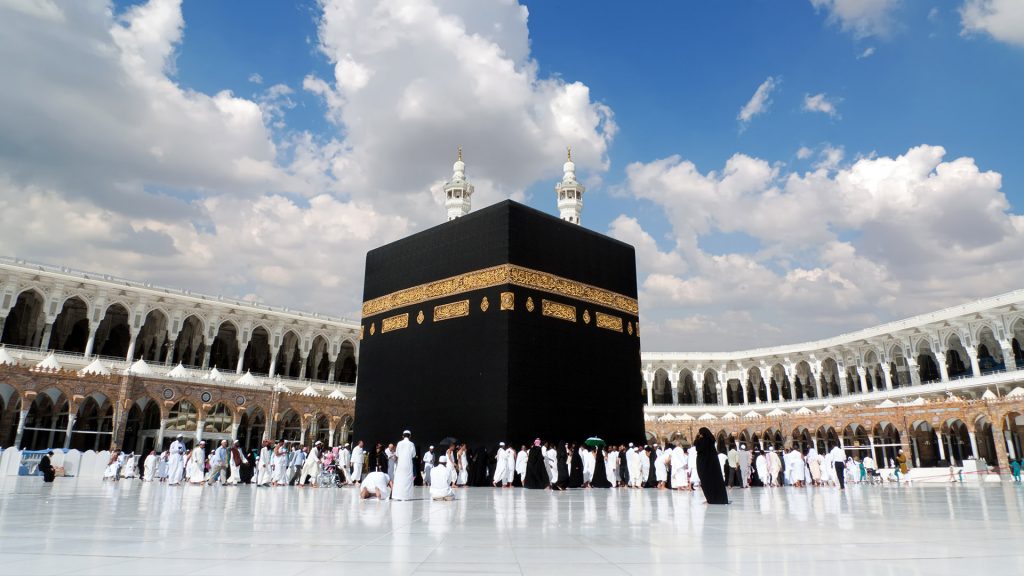
What does Islam really teach? What are its fundamental beliefs, and what are the actions it enjoins? What is the Qur’an, and what wisdom does it contain? These pages seek to answer these questions, and give the reader a perfect starting point to learn about this great faith. We start with the Articles of Faith, which are the six core beliefs of Islam. As it is a key principle in Islam that belief must be put into action, we then move onto the Pillars of Faith, which are the five key religious acts to be performed by Muslims. Thereafter we discuss the Qur’an, and offer an overview of Islamic History. Please note that the letters (sa)/pbuh or (as) appearing after the name of the Prophet Muhammadsa and other Prophets respectively, indicates an Arabic honorific translating to ‘peace be upon him.’ (ra) indicates ‘May Allah be pleased with him/her.’ Further Learning Once you’ve exhausted the pages on this website, you may want to know where else you can learn about Islam! For that reason, we’ve compiled some further sources of education below. Books An Elementary Study of Islam By Hazrat Mirza Tahir Ahmad This book, written by the blessed 4th Khalifa of the Ahmadiyya Muslim Community, provides an insightful overview of the core teachings of Islam. Much of this section is excerpted from this wonderful introduction. Read it now. Holy Qur’an with Short Commentary This publication of the Ahmadiyya Muslim Community is a perfect introduction to the text of the Qur’an itself. With an easy-to-read English translation, and commentary summarised from the 2nd Khalifa’s, the book constitutes a short but in-depth primer to Qur’anic scholarship. Read it online or by PDF. Philosophy of the Teachings of Islam By Hazrat Mirza Ghulam Ahmad This classic of Ahmadiyya literature has introduced countless souls to the world of Islam. A deep and revolutionary analysis of the Islamic teachings by the Promised Messiah himself. Enlightenment awaits! Read it now. You can find countless more books freely available on the Alislam library. Multimedia MTA International The revolutionary broadcasting channel of the Ahmadiyya Muslim Community, MTA (Muslim Television Ahmadiyya) now has several different channels with endless content on Islam 24/7. See it on YouTube, watch live on its website, or visit channel 787 on Sky TV. Alislam.org Alislam is the international homepage of the Ahmadiyya Muslim Community. It is a repository of information on Islam and the Ahmadiyya Muslim Community, featuring thousands of books, articles, and hours of media production. Visit Alislam now. Ask Islam This is a treasure-trove of information on every subject, excerpted from audio recordings of the late 4th Khalifa of the Ahmadiyya Muslim Community, Hazrat Mirza Tahir Ahmad. Just search your query, and find an answer! Visit now. The Tahir Archive This YouTube channel collects all the video material of the 4th Khalifa of the Ahmadiyya Muslim Community, Hazrat Mirza Tahir Ahmad. Here you can find full original Q&A sessions, lectures delving into the depths of Holy Qur’an teachings, and videos with translations into many of the world’s languages. A must watch for further education on Islam. Watch it online here. Articles of Faith Belief in God’s Unity The following article was written by the 4th Khalifa of the Ahmadiyya Muslim Community, Hazrat Mirza Tahir Ahmad, in his much-lauded book, An Elementary Study of Islam. *** This seems to be a rather simple and elementary concept. It should not be difficult for anybody to understand the oneness of God, and there the matter seems to rest. But in fact there is far more to this than meets the eye. When one examines the concept of Unity in depth, the entire world of religion seems to revolve around this pivotal point. This belief influences man’s life in all its aspects. It also implies the negation of all else but God. So belief in the oneness of God is not the end-all of belief, but all other beliefs spring from this fountain-head of eternal truth. This also delivers a message of liberation from all other yokes and releases man from all obligations except such as is born out of his submission to God. This article has been further elucidated from different angles, both in the Holy Qur’an and the traditions of the Holy Prophet(sa) of Islam. For instance, the declaration ‘La houl wala quat illa Billah’ (There is no all-encompassing power except Allah) opens up new windows for a deeper and wider understanding of Unity. It negates all fears other than the fear of God. The second part of the same brings to the focus of attention another very important aspect of Unity, i.e. that the power to achieve good is solely dependent on God and that He is Master of all sources of strength and energy. Hence while the first part relates to the negative aspects of power, the second part relates to the positive. In application to human actions, intentions and motivations etc., these two forces are all-encompassing. Man’s intentions and his subsequent actions are always guided and controlled either by fear or hope and there is no exception to this rule. Those who do good deeds do so out of fear and hope, and those who indulge in vices are motivated by the same. The fears of non-believers belong to the negative ungodly category, and they shape their lives in accordance with these worldly fears. Sometimes they are afraid of earning the displeasure of monarchs and authorities, sometimes they are afraid of society in general or of despots and bullies. Again, sometimes they act evilly out of a fear of poverty and loss etc. So, in a world full of vices, a large part of human actions can be explained with reference to these fears. The belief in Unity dispels these fears altogether and brings to one’s mind the importance of the fear of God, which means that one must not be afraid of the displeasure of the ungodly, but should always endeavour to avoid displeasing God and shape one’s life according to that fear alone. In the positive sense, the same applies to all human motivations and consequent
Ahmadiyya Beliefs

Overview The Ahmadiyya Muslim Community is a community of Muslims who believe that Mirza Ghulam Ahmad of Qadianas (1835-1908) was the Promised Messiah and Imam Mahdi. Ahmadis believe that he was the foretold reformer for the latter days, promised in both Islamic and non-Islamic religious texts. For while it exults in material progress, the world finds itself in an age of spiritual darkness. Ahmad claimed to be the light for this age, to guide seekers of truth into spiritual enlightenment. His followers now number in the tens of millions, spread over 200 countries of the world. Though they are persecuted bitterly in some parts of the globe, and deemed heretical by many an established cleric, their cause continues to find progress in every quarter of the globe. Having translated the Holy Qur’an into over 70 languages, their mission is to spread the original peaceful teachings of Islam throughout the world. The community has now 4 international satellite television channels, spreading the peaceful and rational message of the Prophet Muhammadsa throughout the globe. Its literature and missionary efforts have been hailed as pioneering in the USA, Europe and Africa in particular. In recent years, the message of the Promised Messiahas has become more widely heard in the Middle East, with unprecedented numbers of Arabs joining. What can explain the success of such a religious community, perhaps the only in the world to rely entirely on the donations of its own adherents? How can we explain the success of a spiritual movement that is bitterly opposed by many governments and religious orders alike? Perhaps the answer lies in divine support for a refreshingly rational and peaceful presentation of Islam, with a message that satisfies the mind and moves the heart. Beliefs This page will explore the beliefs of Ahmadi Muslims, exploring both similarities and differences with our Non-Ahmadi ‘Sunni’ and ‘Shia’ brothers and sisters. A brief summary follows: Ahmadi Muslims believe in the Five Pillars of Islam, the Six Articles of Faith, the superiority of the Qur’an over all other texts, the station of Muhammadsa as Seal of the Prophets, the pre-eminence of the Rightly-Guided Khulafa, the high station of the Prophet’ssa companions, and all the other major aspects of Islam agreed upon by the 4 major schools of Sunni Islam. We also believe in the lofty station of the immediate descendants of the Holy Prophet Muhammadsa , while not ascribing inherent divine leadership to them. Ahmadi Muslims differ from contemporary Sunni & Shia Muslims in a few important areas: Death of Prophet Jesusas Ahmadi Muslims believe that Jesusas was a Prophet like other Prophets. As such, we do not accept the idea held by many clergy today that Jesusas has ascended to heaven, and is waiting to return with sword in hand, to herald a bloody end to the world. Ahmadi Muslims deem this belief a dishonour to the peaceful and rational teachings of Islam, and trace this belief’s origin in Muslim thought to an era long after that of the Prophet Muhammadsa , when great numbers of Christians entered into the fold of Islam. Such beliefs find no basis in the Qur’an or the authentic traditions of the Qur’an and are in fact refuted by them. Based on Qur’anic, Biblical, and historical records, Ahmadis believe that Jesusas survived the crucifixion attempt on his life, escaped the clutches of the Roman Empire, and fled East to the lands of Tibet and India. There he preached to the lost tribes of the House of Israel, before dying at the age of 120 in Kashmir. There his tomb is to be found, venerated by the local population as the tomb of Jesusas , who visited the land 2000 years ago. Second Coming of Jesusas There is a clear prophecy in the Qur’an about the second appearance of the Prophet Muhammadsa in the Latter Days. There are also explicit prophecies of the Prophetsa regarding the Second Coming of the ‘Messiah, Son of Mary,’ as well as references to the arrival of the ‘Imam Mahdi.’ To Ahmadis, all these prophecies relate to different aspects of the same Prophetic figure in this era. As Jesusas has passed away, the ‘second coming of the Messiah’ can only have a metaphorical and symbolic meaning: in the same way that Jesusas was the Messiah for the Jews in the 14th century after Moses, the prophecy foretells a messianic figure for the Muslims appearing in the 14th century after the Prophet Muhammadsa . The character of both respective communities would be similar. The Jews in the time of Jesusashad become extremists, with many supporting a terrorist movement known as the Zealots who sought to overthrow the ruling Roman Empire and establish a Jewish state. In the same way, the Muslim clergy of today adhere to extremist beliefs, often showing support to extremist groups who seek to overthrow western government by violent means. Moreover, the metaphor of the ‘Second Coming’ indicated that the character of the respective Messiahs would be similar. Whereas Jesusas came with a teaching of compassion and tenderness to a hard-hearted Jewish nation, so too would the Muslim Messiah come with a teaching of peace and sympathy to a hard-hearted Muslim nation. Thus the Second Coming was symbolic, indicating that there would be a spiritual affinity between the Jewish Messiah and the Muslim Messiah. Not only this, but Ahmadis believe that the prophecies of the Imam Mahdi indicate that he would also be the Messiah, and would be a spiritual manifestation of the Prophet Muhammadsahimself. Taken together, both the Qur’an and the narrations tell us that the Mahdi and the Messiah are two aspects of the same individual. This individual would be a spiritual reflection of the Prophet Muhammadsa himself. For Ahmadi Muslims, that individual was the Mirza Ghulam Ahmad of Qadianas . Finality of Prophethood The Holy Qur’an calls the Prophet Muhammadsa the ‘Seal of the Prophets’. It is often claimed that Hazrat Mirza Ghulam Ahmadas contradicted this by claiming to be a Follower-Prophet himself. This is a misconception based on the idea that the term the ‘Seal of the Prophets’ means that there would be literally no
Introduction to Islam

What does Islam really teach? What are its fundamental beliefs, and what are the actions it enjoins? What is the Qur’an, and what wisdom does it contain? These pages seek to answer these questions, and give the reader a perfect starting point to learn about this great faith. We start with the Articles of Faith, which are the six core beliefs of Islam. As it is a key principle in Islam that belief must be put into action, we then move onto the Pillars of Faith, which are the five key religious acts to be performed by Muslims. Thereafter we discuss the Qur’an, and offer an overview of Islamic History. Please note that the letters (sa)/pbuh or (as) appearing after the name of the Prophet Muhammadsa and other Prophets respectively, indicates an Arabic honorific translating to ‘peace be upon him.’ (ra) indicates ‘May Allah be pleased with him/her.’ Further Learning Once you’ve exhausted the pages on this website, you may want to know where else you can learn about Islam! For that reason, we’ve compiled some further sources of education below. Books An Elementary Study of Islam By Hazrat Mirza Tahir Ahmad This book, written by the blessed 4th Khalifa of the Ahmadiyya Muslim Community, provides an insightful overview of the core teachings of Islam. Much of this section is excerpted from this wonderful introduction. Read it now. Holy Qur’an with Short Commentary This publication of the Ahmadiyya Muslim Community is a perfect introduction to the text of the Qur’an itself. With an easy-to-read English translation, and commentary summarised from the 2nd Khalifa’s, the book constitutes a short but in-depth primer to Qur’anic scholarship. Read it online or by PDF. Philosophy of the Teachings of Islam By Hazrat Mirza Ghulam Ahmad This classic of Ahmadiyya literature has introduced countless souls to the world of Islam. A deep and revolutionary analysis of the Islamic teachings by the Promised Messiah himself. Enlightenment awaits! Read it now. You can find countless more books freely available on the Alislam library. Multimedia MTA International The revolutionary broadcasting channel of the Ahmadiyya Muslim Community, MTA (Muslim Television Ahmadiyya) now has several different channels with endless content on Islam 24/7. See it on YouTube, watch live on its website, or visit channel 787 on Sky TV. Alislam.org Alislam is the international homepage of the Ahmadiyya Muslim Community. It is a repository of information on Islam and the Ahmadiyya Muslim Community, featuring thousands of books, articles, and hours of media production. Visit Alislam now. Ask Islam This is a treasure-trove of information on every subject, excerpted from audio recordings of the late 4th Khalifa of the Ahmadiyya Muslim Community, Hazrat Mirza Tahir Ahmad. Just search your query, and find an answer! Visit now. The Tahir Archive This YouTube channel collects all the video material of the 4th Khalifa of the Ahmadiyya Muslim Community, Hazrat Mirza Tahir Ahmad. Here you can find full original Q&A sessions, lectures delving into the depths of Holy Qur’an teachings, and videos with translations into many of the world’s languages. A must watch for further education on Islam. Watch it online here.
Other Prophets
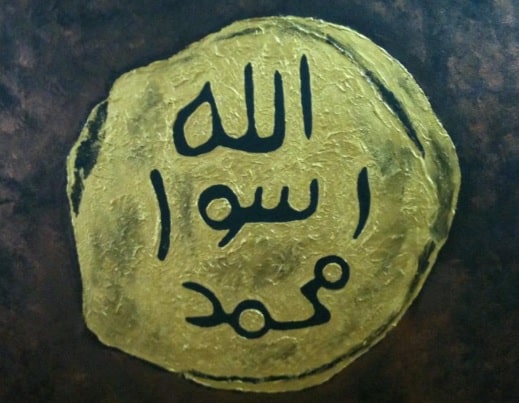
Overview Our universe and all that it contains is the creation of Allah, the Wise. He has created everything with a purpose and to achieve that purpose He has provided all necessary guidance and means. He has created man in His own image and has made him the chief of His creation. Both good and bad have been made manifestly clear to man. He has also been blessed with wisdom by which he can find out the right path, can sift right from wrong and truth from falsehood. The Holy Quran tells us that man has been endowed with both spiritual and physical eyes by which he can distinguish good from evil and has been given a tongue and two lips that he might ask for guidance, and above all God has placed before him a supreme object of his life that he may devote all his faculties and energies to achieve it. Man has been granted the choice of both selection and action. Hence he is the master of his own destiny. To achieve the object of life, God, out of His benevolence raises prophets, who serve as models. These prophets have been appearing in every people and in all parts of the world. Their mission has always been to guide mankind to its Creator, through their example and model. The guidance revealed through each prophet was designed to cater for the specific needs of the time and location; hence they were essentially temporary in nature. With the advancement and maturity of mankind God sent advanced and matured teachings suitable to their time. God’s guidance for human race commenced through Adam (peace be upon him) and reached the zenith through Mohammed (peace and blessings of Allah be upon him). God says, “This day have I perfected your religion for you and completed my favor upon you and have chosen for you Islam as religion.” – Holy Qur’an, 5:4 Thus the revelation of Law, or Shariah, was perfected and completed by Islam. According to one saying of the Prophet Muhammadsa the number of prophets who were chosen to convey the message of God to mankind is 124,000. The names of all of them are not mentioned anywhere. However the Holy Quran states in very clear words, “There are no people (in the world) to whom We have not sent a Warner.” – Holy Qur’an 35:25 It also mentions the following twenty-eight prophets by name: Adam (peace be upon him), Noah (peace be upon him), Abraham (peace be upon him), Lot (peace be upon him), Ishmael (peace be upon him), Isaac (peace be upon him), Jacob (peace be upon him), Joseph (peace be upon him), Hud (peace be upon him), Salih (peace be upon him), Shuaib (peace be upon him), Moses (peace be upon him), Aaron (peace be upon him), David (peace be upon him), Solomon (peace be upon him), Elias (Elijah) (peace be upon him), Jonah (peace be upon him), Ezekiel (Dhul-Kifl) (peace be upon him), Elisha (Alyasa) (peace be upon him), Idris (Enoch) (peace be upon him) (19:57), Job (peace be upon him) (4:164), Zechariah (peace be upon him) (19:3),John (Yahya) (peace be upon him) (3:40), Jesus (peace be upon him) (3:46), Luqman(peace be upon him) (31:13), Ezra (peace be upon him) (9:30), Dhul-Qarnain (peace be upon him) (18:84), Mohammad (peace and blessings of Allah be upon him) (48:30). Belief in all the prophets and their messages is an integral part of the belief of every Muslim. The Holy Quran states, “This messenger of Ours believes in that which has been revealed to him from his Lord, and so do the believers; all of them believe in Allah, and in His angels, and in His Books, and in His Messengers, saying, ‘We make no distinction between any of His Messengers.’ ” –Holy Qur’an, 2:286. In prophethood all are equal but their ranks are different as is clear from the following verse of the Holy Quran, “These Messengers have We exalted some of them above others; among them there are those whom Allah spoke; and some of them He exalted in degrees of rank…’ – Holy Qur’an, 2:254 So Wherever and to whichever people prophets have been sent, they are our (Muslims) prophets as well, and we hold them in great reverence. The following brief histories of a few of them is given for the benefit of the reader. This overview was written by Daud A. Hanif, as originally published by the Muslim Sunrise. Other Prophets Adam This article was first published on alislam, titled Quran, Adam and Original Sin by Belal Khalid. An extract was also taken from an interview by Professor Wraig of Hadhrat Mirza Ghulam Ahmadas . *** Evolution and History of Mankind from Quran The Holy Quran says that God desired to bring into existence a universe which should serve as a manifestation of His Majesty and His Light and that this was the cause of the creation of universe. It says that God created the heavens and the earth in six periods. Before that God ruled over water. God`s object in creating the heavens and the earth out of water was to bring into existence a being endowed with the will to choose between good and evil. These beings would pass through various trials and would seek to outstrip one another in doing good and thus show which of them had attained to perfection (11:8). This verse shows that before matter assumed its present form, it existed in liquid shape. With regard to the pre-material stage the Quran says: “Do not the disbelievers see that the heavens and the earth were a closed up mass, then We opened them out? And We made from water every living thing. Will they not then believe?” – (Holy Qur’an, 21:31) The verse purports to say that the heavens and the earth were at first an amorphous mass and God then split them and formed them into a solar system and form the beginning He has always created life out of water. Stages of the Universe According to the Quran the universe passed from stage to stage till the earth assumed a shape
The Promised Messiah
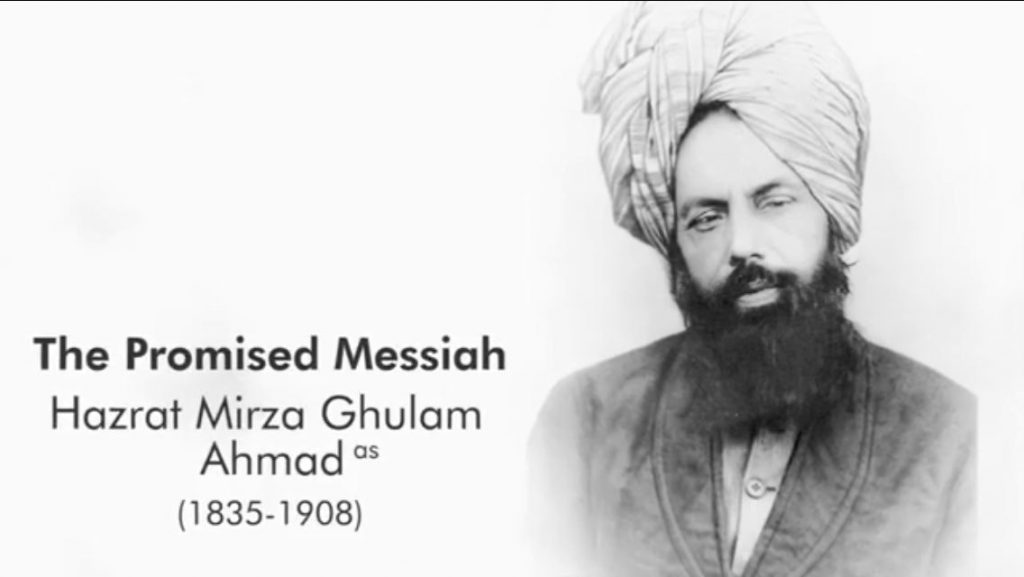
Introduction HAZRAT MIRZA GHULAM AHMAD OF QADIAN While the beliefs of the Ahmadiyya Muslim Community can be explored in detail here, these pages will focus on the life and times of the Promised Messiah, Hazrat Mirza Ghulam Ahmad. His was a special life, one of immense success in the face of immense hardship, leaving a legacy that resonates more and more strongly in every region of the world. Before moving directly presenting a life sketch, this page presents various different sources for learning about the life of Hazrat Mirza Ghulam Ahmad. Sources For the reader seeking an impartial view, the biography by a non-Muslim, Iain Adamson, is perhaps the first port of call. Ahmad, The Guided One is a review of his life and claims. Ahmad’s life and Adamson’s skill makes for a stirring read. A biography of more detail is Life of Ahmad — Founder of the Ahmadiyya Movement, written by Abdur Rahim Dard. Dard was a companion of the Promised Messiah, and the first Imam of the historic London Mosque. The biography leaves no stone unturned in bringing you to witness the remarkable life of Ahmad. Another invaluable source is a collection of revelations of the Promised Messiah, named Tadhkirah. This volume, with a page count numbering over 1000, gives an intimate sketch of Ahmad’s spiritual life. Tadhkirah is composed of Ahmad’s own recounting of God’s revelations, stretching from his early life to his last days. This unique volume allows one to glimpse into the soul of a Prophet. Finally we have Essence of Islam Vol. 4. This volume again collects writings from Ahmad’s own corpus, this time exploring his claims and arguments in detail. This volume is perfect for those wishing to explore the specific theological claims of the Promised Messiah. Further resources can be found here. Videos Below are some videos from the Ahmadiyya Muslim Community on the life of the Promised Messiah: Promised Messiah And The Timeline Of History Messiah of the Age Second Coming of the Messiah THE PROMISED MESSIAH HAZRAT MIRZA GHULAM AHMAD OF QADIAN Hazrat Ahmad By Mirza Bashirrudin Mahmood Ahmad Second Khalifa of the Ahmadiyya Muslim Community The following pages give a life sketch of Hazrat Mirza Ghulam Ahmad, the Promised Messiah. The material is directly adapted from a book written by Hazrat Mirza Bashiruddin Mahmood Ahmad, the son of the Promised Messiah and the second Khalifa of the Ahmadiyya Muslim Community. The foreword is written by Hazrat Muhammad Zafrullah Khan, one of the companions of the Promised Messiah and a renowned scholar, jurist and statesman. The book constitutes a perfect introduction to the life and times of His Holiness — “Hazrat” — Mirza Ghulam Ahmad. Foreword The closing years of the nineteenth and the opening years of the twentieth century witnessed the transition from one epoch of human history to another. Since then man’s daily increasing knowledge of the laws of nature and his growing mastery of its forces have added a new dimension to human life on earth. This tremendous upheaval has released a bewildering variety and complexity of problems in every sphere of life. While some sort of adjustment and co-ordination are in the process of being worked out in the physical sphere, moral and spiritual values are demonstrably fighting a losing battle and there does not appear to be much chance of their making a firm stand, leave alone advancing boldly forward against the forces of disintegration. The prospects are bleak and cheerless. The safeguarding of these values is pre-eminently the task of religion, and religion appears supine on the ground and helpless in this confrontation. It seems more than likely that it may soon be swept out of the way by the surging forces of so-called modernity and progress. The terrible truth is that all progress is impelling mankind towards chaos and annihilation rather than towards security and prosperity. The physical and the material have become the sole concern and pre-occupation of man. He is totally beguiled, and has no thought to spare for the morrow and the Hereafter. Yet, what shall it profit a man if he gains the whole world but loses his own soul? Is there, then no help, while the guides and guardians of the spirit are beginning to repudiate God Himself, by asserting that God is no more than the centre of our being, and proclaiming boldly: God is dead? Indeed, there is: “Allah-there is no God but He, the living, the Self-Subsisting and All-Sustaining. Slumber seizes Him not, nor sleep. To Him belongs whatsoever is in the heavens and whatsoever is in the earth. Who is he that will intercede with Him except by His permission? He knows what is before them and what is behind them, and they encompass nothing of His knowledge except what He pleases. His knowledge extends over the heavens and the earth; and the care of them burdens Him not; and He is the High, the Great”(The Quran 2:256) THE OPENING CHAPTER OF THE HOLY QUR’AN If this is so, why does God not manifest Himself in this age as He has done so in the past? Why are His attributes not in operation today, as they were in the past? When it is said: ‘God is dead’, why does not God proclaim: ‘I am not, 1 am the Ever-Living, the Self-Subsisting, the All-Sustaining’? God’s attributes are eternal and are in operation all the time. He manifests Himself today as He did in ages past, and by the same tokens, He furnishes guidance, adequate for all contingencies, at all times. He reveals Himself constantly to those of His servants who strive after Him. All the contingencies and complexities of this epoch lie open before Him, and He has, in His perfect wisdom, made provision for all of them. Only He has left it to the free choice of each of His creatures to choose and follow the Path of guidance and security or that of error and ruin. The comprehensive guidance is contained in the Quran, the verbal revelation vouchsafed to the Prophet of Islam
The Prophet Muhammad

Introduction The Prophet Muhammadas, peace be upon him (sa), was the founder of Islam. On these pages, we will briefly outline his life story, drawing upon the sources listed below. By tracing the life story of the Holy Prophetsa , one can separate myth from reality, and perceive the radiant character of the Prophetsa shining through. To begin with, we will present some excerpts from the writings of his greatest lover, Hazrat Mirza Ghulam Ahmad, the Promised Messiah and Mahdi: “That light of high degree that was bestowed on perfect man was not in angels, was not in stars, was not in the moon, was not in the sun, was not in the oceans and the rivers, was not in rubies, emeralds, sapphires, or pearls; in short, it was not in any earthly or heavenly object. It was only in perfect man whose highest and loftiest and most perfect example was our lord and master, the Chief of the Prophets, the Chief of all living ones, Muhammad, the chosen one (sa). That light was bestowed on this man and, according to their ranks, upon all those who bore the same colour to some degree…. This dignity was found in its highest and most perfect form in our lord and master and our guide, the immaculate Prophet, the righteous one, testified to by the righteous, Muhammad, the chosen one (sa).” “O all ye who dwell upon the earth, and O all human souls that are in the east or in the west, I announce to you emphatically that the true reality in the earth is Islam alone,and the True God is the God Who is described in the Qur’an, and the Prophet who has everlasting spiritual life and who is seated on the throne of glory and holiness, is Muhammad, the chosen one (sa). The proof of his spiritual life and holy majesty is that by following him and loving him we become recipients of the Holy Spirit and are favoured with the bounty of converse with God and witness heavenly signs.” “When we estimate justly, then out of the whole series of Prophets, we find one of high courage and alive and greatly dear to God, the Chief of the Prophets, the pride and the crown of the Messengers, whose name is Muhammad Mustafa and Ahmad Mujtaba [peace and blessings of Allah be on him]. By walking under his shadow for ten days one obtains that light which before him could not be obtained in a thousand years…. We have found every light by following the immaculate Prophet and whoever follows him will also find it and he will become so accepted of God that nothing will be impossible for him. The Living God, Who is hidden from people, will be his God and all false gods will be trodden under his feet. He will be blessed everywhere and Divine Power will be with him. Peace be on him who follows the guidance.” “I always wonder how high was the status of this Arabian Prophet, whose name was Muhammad, (thousands of blessings and peace be upon him). One cannot reach the limit of his high status and it is not given to man to estimate correctly his spiritual effectiveness. It is a pity that his rank has not been recognized, as it should have been. He was the champion who restored to the world the Unity of God which had disappeared from the world; he loved God in the extreme and his soul melted out of sympathy for mankind. Therefore, God, Who knew the secret of his heart, exalted him above all the Prophets and all the first ones and the last ones and bestowed upon him in his lifetime all that he desired. He is the fountainhead of every grace and a person who claims any superiority without acknowledging his grace is not a man but is the spawn of Satan, because the Holy Prophet has been bestowed the key to every exaltation and he has been given the treasury of every understanding. He who does not receive through him is deprived forever. I am nothing and possess nothing. I would be most ungrateful if I were not to confess that I have learnt of the true Unity of God through this Prophet. The recognition of the Living God we have achieved through this perfect Prophet and through his light. The honour of converse with God, through which we behold His countenance, has been bestowed upon me through this great Prophet. The ray of this sun of guidance falls like sunshine upon me and I continue illumined only so long as I am adjusted towards it.” Sources: The main bulk of biography over the following pages was from A Book of Religious Knowledge by Waheed Ahmed. Some very minor amendments have been made. The description of the Prophet’ssapersonal qualities comes from Life of Muhammed by Mirza Bashiruddin Mahmood Ahmadra Miscellaneous articles on https://www.alislam.org/holyprophet/ were also consulted during this process. N.B.: The use of ‘pbuh’ signifies ‘peace be upon him’ and is an honorific given in Islam to prophets of God. It is especially important to say this after mentioning the Prophet Muhammadsa . The use of ‘ra’ signifies the Arabic for ‘may Allah be pleased with him/her’ and is often used after mentioning the name of a companion of the Prophetsa . The Prophet’s Early Life The Holy Prophet Muhammadsa, was the Founder of Islam, and the one to whom the final religion was revealed by Allah. He was born in a noble family in 570 CE in Makkah, Arabia, and was a descendent of Prophet Abraham (peace be upon him). The word ‘Muhammad’ literally means ‘praiseworthy’. Family Background The Holy Prophet Muhammadsa belonged to the tribe of Quraysh, the leading tribe of Makkah. The Quraysh were descendants of Prophet Abrahamsa through his son, Prophet Ismail. The Ka’bah, which is considered by Muslims to be the first house of God, was rebuilt by Abraham and his son Ismail some 2600 years before the Holy Prophetsa . Pre-Islam Arabia At the time of the birth of the Prophet Muhammadsa , the whole world seemed to be passing through a period of extreme
How Can We Know God?

Three Stages of Divine Realisation The Promised Messiah, Mirza Ghulam Ahmadas, peace be upon him, wrote at length about how we can be convinced of the existence of God for ourselves. He taught that believing in God is not an on/off switch. Rather, our certainty concerning God can be of different types. He outlined three different levels of certainty of God. These were the certainty by means of inference; certainty by means of sight, and certainty by means of experience. He wrote, “The Holy Quran has drawn attention to three types of knowledge: knowledge by way of certainty of inference, knowledge by way of certainty of sight, and knowledge by way of certainty of experience. As we have already explained knowledge by certainty of inference is that a thing should be known not directly but through something through which it can be inferred, as by observing smoke we infer the existence of fire. We do not see the fire, but see the smoke and because of it we believe in the existence of the fire. Then if we see the fire, this, according to the Holy Quran, would be certainty by sight. If we were to enter into the fire, our knowledge would have the quality of certainty by experience. We have set out all this already and we refer our listeners and readers to that exposition.” Certainty of Inference “It should be known that the source of the first type of knowledge, that is to say knowledge by the certainty of inference, is reason and information. God Almighty sets out in the Holy Quran that the dwellers of hell will affirm: “And they will say, ‘If we had but listened or possessed sense, we should not have been among the inmates of the blazing Fire.’” Holy Qur’an, 67:11 That is, those who go to hell will say if they had exercised their reason and had approached the consideration of religion and doctrine sensibly, or had listened to and read with attention the speeches and writings of the wise and the scholars, they would not have been condemned to hell… These verses also indicate that one can obtain the certainty of knowledge by inference through one’s ears also. For instance, we have not visited London and have only heard of it from those who have visited it, but then can we imagine that all of them might have told a lie? Or, we did not live in the time of Emperor Alamgir, nor did we see him, but can we have any doubt that Alamgir was one of the Moghul emperors? How did we arrive at that certainty? The answer is, through the continuity of hearing about him. Thus, there is no doubt that hearing also carries one’s knowledge to the stage of certainty by inference. The books of the Prophets are also a source of knowledge through hearing, provided there should be no contradiction in the account that is heard… The Holy Quran is not confined merely to knowledge gained through continuity of hearing, it contains well reasoned arguments which carry conviction. Not one of the doctrines and principles and commandments that it sets forth is sought to be imposed merely by authority; as it has explained, they are all inscribed in man’s nature… Thus, intellectual arguments which have a sound basis undoubtedly lead a person to the certainty of knowledge by inference.” THE UNIVERSE IS REPLETE WITH SIGNS OF GOD’S EXISTENCE Certainty of Sight “With regard to the hereafter our knowledge arrives at the degree of certainty by sight when we receive direct revelation and hear the voice of God through our ears, and behold the true and clear visions of God with our eyes. Without a doubt we are in need of direct revelation for the purpose of achieving such perfect understanding for which our hearts hunger and thirst in our beings. If God Almighty has not provided the means of such comprehension for us in advance then why has He created this hunger and thirst in our hearts? Is it not true that an affirmation by the Living God: I am present; bestows such a degree of understanding compared with which the self conceived books of all the philosophers amount to nothing at all? What can those so-called philosophers who are themselves blind teach us? In short, if God Almighty designs to bestow perfect understanding upon His seekers then He has certainly kept open the way of converse with them.” Certainty of Experience “The third source of knowledge is certainty through experience, that is to say, all the hardships and calamities and sufferings that are experienced by the Prophets and the righteous at the hands of their opponents, or that are imposed upon them by Divine decree. Through these hardships and sufferings all the commandments of the law and its directions that were comprehended by the human mind intellectually, appear in practical shape and become experience, and by being developed by practical exercise arrive at their climax, and the person concerned himself becomes a perfect code of Divine guidance.” Progressing from Faith to Certainty While there are many logical reasons to believe in God, such intellectual endeavour can only take you so far. Even if you believe in God on an intellectual level because of what you read of scientific discoveries, Qur’anic prophecies, and spiritual testimonies, such things won’t give you a personal experience of God. For that, you need to commit to the path of True Islam for yourself. You have to live your life dedicated to God. With such actions, you progress along the spiritual path. With such actions, you witness the existence of God in your own lives, you begin to experience true dreams and other spiritual experiences, and where your doubt once was you find only courage and conviction. The Promised Messiah, writing on this topic, tells us: “The Word of God directs us: Have faith and you will be delivered. It does not tell us: Demand philosophical reasons and conclusive
Who is God?
Who is God? Holy Qur’an On this page we share translated excerpts from the Holy Qur’an, the holy book of Muslims, on the nature and character of “Allah” – the One God. Provided in the verse references are links to commentaries that shed light upon the hidden depths of these verses. Al-Fatiha, the Opening “In the name of Allah, Most Gracious, Ever Merciful All praise belongs to Allah, the Lord of all the Worlds, The Gracious, the Merciful, Master of the Day of Judgment Thee alone do we worship, and thee alone do we implore for help, Guide us on the right path, The path of those on whom You have bestowed blessings, not of those who have incurred Your wrath, nor of those who have gone astray.” Holy Qur’an, 1: 1—7 From Al-Baqarah—The Cow “And when My servants ask thee about Me, say: ‘I am near. I answer the prayer of the supplicant when he prays to Me. So they should hearken to Me and believe in Me, that they may follow the right way.’” Holy Qur’an, 2:187 “Allah — there is no God but He, the Living, the Self-Subsisting and All-Sustaining. Slumber seizes Him not, nor sleep. To Him belongs whatsoever is in the heavens and whatsoever is in the earth. Who is he that will intercede with Him except by His permission? He knows what is before them and what is behind them; and they encompass nothing of His knowledge except what He pleases. His knowledge extends over the heavens and the earth; and the care of them burdens Him not; and He is the High, the Great.” Holy Qur’an 2:256 From Al-Hadid—The Iron “Whatever is in the heavens and the earth glorifies Allah; and He is the Mighty, the Wise. His is the Kingdom of the heavens and the earth; He gives life and He causes death, and He has power over all things. He is the First and the Last, and the Manifest and the Hidden, and He has full knowledge of all things. He it is Who created the heavens and the earth in six periods, then He settled Himself on the Throne. He knows what enters the earth and what comes out of it, and what comes down from the heaven and what goes up into it. And He is with you wheresoever you may be. And Allah sees all that you do. His is the Kingdom of the heavens and the earth; and to Allah are all affairs returned for final judgment.” Holy Qur’an, 57: 2—6 From Al-Mulk—The Kingdom “Blessed is He in Whose hand is the kingdom, and He has power over all things; Who has created death and life that He might try you — which of you is best in deeds; and He is the Mighty, the Most Forgiving. Who has created seven heavens in harmony. No incongruity canst thou see in the creation of the Gracious God. Then look again: Seest thou any flaw? Aye, look again, and yet again, thy sight will only return unto thee confused and fatigued.” Holy Qur’an 67:2—6 From Al-Hashr—The Exile “He is Allah and there is no god beside Him, the Knower of the unseen and the seen. He is the Gracious, the Merciful. He is Allah and there is no god beside Him, the Sovereign, the Holy One, the Source of peace, the Bestower of security, the Protector, the Mighty, the Subduer, the Exalted. Holy is Allah, far above that which they associate with Him. He is Allah, the creator, the Maker, the Fashioner. His are the most beautiful names. All that is in the heavens and the earth glorifies Him, and He is the Mighty, the Wise.” Holy Qur’an 59:23—25 THE OPENING CHAPTER OF THE HOLY QUR’AN HAZRAT MIRZA GHULAM AHMADAS OF QADIAN THE PROMISED MESSIAH & IMAM MAHDI Promised Messiah’s Literature The Promised Messiah, Mirza Ghulam Ahmadas wrote over 80 books. In these, he demonstrated his intimate and personal knowledge of God. We present a few such extracts from his vast corpus below, excerpted from the Essence of Islam series of books. The God of Islam “The God of Islam is the same God Who is visible in the mirror of the law of nature and is discernible in the book of nature. Islam has not presented a new God but has presented the same God Who is presented by the light of man’s heart, by the conscience of man, and by heaven and earth.” The Search for God “Of the natural conditions of man is his search after an Exalted Being towards Whom he has an inherent attraction. This is manifested by an infant from the moment of its birth. As soon as it is born, it displays a spiritual characteristic that it inclines towards its mother and is inspired by love of her. As its faculties are developed and its nature begins to display itself openly, this inherent quality is displayed more and more strongly. It finds no comfort anywhere except in the lap of its mother. If it is separated from her and finds itself at a distance from her, its life becomes bitter. Heaps of bounties fail to beguile it away from its mother in whom all its joy is concentrated. It feels no joy apart from her. What, then, is the nature of the attraction which an infant feels so strongly towards its mother? It is the attraction which the True Creator has implanted in the nature of man. A BABY REACHES OUT FOR THEIR MOTHER, REFLECTING MAN’S INNATE SEARCH FOR GOD The same attraction comes into play whenever a person feels love for another. It is a reflection of the attraction that is inherent in man’s nature towards God, as if he is in search of something that he misses, the name of which he has forgotten and which he seeks to find in one thing or another which he takes up from time to time. A person’s love of wealth
Culture vs Religion
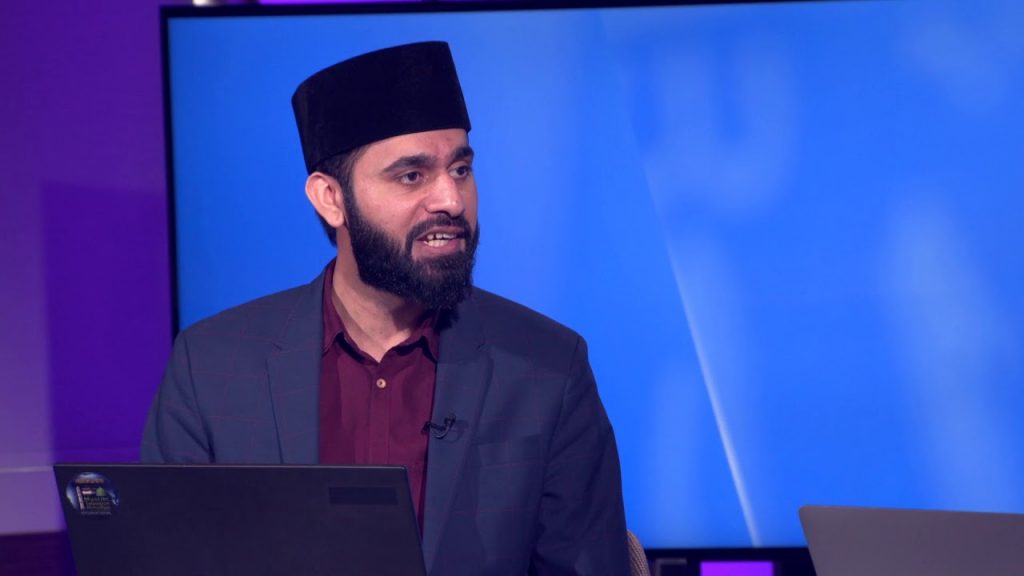
A live interactive English talk show series exploring various matters relating to Islam, the beacon of truth. Presentation of MTA studios Canada. recorded on 17th February 2019.
Head of Ahmadiyya Muslim Community Concludes Majlis Khuddamul Ahmadiyya Ijtema with Faith-Inspiring Address

Hazrat Mirza Masroor Ahmad addresses over 5,600 Muslim youths from across the UK. “Be the ones who are at the forefront of spreading the enlightened teachings of Islam far and wide” – Hazrat Mirza Masroor Ahmad On 23 September 2018, the World Head of the Ahmadiyya Muslim Community, the Fifth Khalifa, His Holiness, Hazrat Mirza Masroor Ahmad delivered a faith-inspiring address to conclude the three-day National Ijtema (Annual Gathering) of the Ahmadiyya Muslim Youth Association in the UK (Majlis Khuddamul Ahmadiyya). The objectives of the Ijtema, held for the second time at Country Market, Kingsley, were to educate the Muslim youths of the true peaceful teachings of Islam and to inspire them towards serving both their faith and nation to the best of their abilities. The theme of this year’s Ijtema was ‘Salat’, the five daily prayers that are to be offered by every Muslim. During the concluding address, His Holiness spoke extensively about the importance of Salat, saying that the five daily prayers ought to remain the ‘constant companion’ of a true Muslim. His Holiness directed that having accepted the Founder of the Ahmadiyya Muslim Community as the Promised Messiah it was incumbent upon Ahmadi Muslims to act upon Islam’s true teachings. Hazrat Mirza Masroor Ahmad said: “If we are negligent in our religious duties, we will have no right to assert that our acceptance of the Promised Messiah (peace be upon him) has brought about a spiritual revolution within us or has enabled us to follow the true teachings of Islam. Rather, our acceptance of him will merely be a hollow and meaningless claim uttered by our tongues.” To highlight the importance of offering the five daily prayers, His Holiness quoted chapter 2 verse 239 of the Holy Quran which states: “Watch over Prayers, and the middle Prayer, and stand before Allah submissively.” His Holiness explained that whilst the verse calls on Muslims to guard against inattention to the five daily prayers, it particularly reminds Muslims to watch over the ‘middle prayer’. Explaining the term ‘middle prayer’, His Holiness said that the ‘middle prayer’ is whichever prayer which is at risk of neglect due to material interests. His Holiness explained that in the modern era the early morning prayer Fajr often the ‘middle prayer’ for many people. Hazrat Mirza Masroor Ahmad said: “In today’s world, people of all ages, including many youngsters, stay up late studying, or wasting time in immoral or wasteful things such as aimlessly surfing the internet, watching films or TV, scrolling endlessly on their phones or tablets or sending messages late into the night. As a result, they fail to wake up for Fajr and so, due to their routine, Fajr actually becomes the middle prayer for them. Thus, the middle prayer is whichever prayer is at risk of being forsaken as a result of worldly or material pursuits.” His Holiness advised Ahmadi Muslim youths to go to bed early so that they could easily wake for the Fajr prayer. He said if that was not possible they must still go to bed with a firm intention and determination to wake up for the Fajr prayer. His Holiness also referred to a saying of the Holy Prophet Muhammad (peace and blessings be upon him) that the reward for the prayers offered in congregation is at least twenty-seven times greater compared to offering the prayer alone. Hazrat Mirza Masroor Ahmad said: “Such narrations make us realise how gracious, generous, merciful and benevolent Allah the Almighty is. Whilst, the punishment for a sin is equivalent and proportionate to the offence committed, when it comes to virtue and good deeds, Allah the Almighty often rewards us many times over. Hence, it is your duty to take benefit of the great mercy of our Gracious God by joining together in our Mosques for congregational prayers and bowing down before Him beseeching His forgiveness for your sins and weaknesses.” Speaking of the theme of this year’s Ijtema being ‘Salat’, His Holiness cautioned that Salat must become an integral part of the life of every Ahmadi Muslim not just for this year, but for the entirety of the life of every Ahmadi Muslim. Hazrat Mirza Masroor Ahmad said: “Do not fall into the trap of thinking that ‘Salat’ is a theme for just one year, rather it should remain the theme underpinning your entire lives. Whatever age you are, and whether you live into your seventies, eighties or even beyond, Salat is the one thing that a true Muslim can never do without. Without it, nothing of value can ever be achieved.” His Holiness commended those Ahmadi Muslim youths who had improved their standards of worship of Allah over the past year. He said they should continue to seek spiritual progress and development, whilst those who had not made any effort to raise their standards of worship should now seek to improve. Hazrat Mirza Masroor Ahmad said: “If there are some who have not made a resolute effort to improve their standards of worship over the past year they should not waste another day. Now is the time to make a firm and conscious decision to improve. Now is the time to start climbing that spiritual ladder that takes us towards our Creator.” Describing the power of sincere prayer, Hazrat Mirza Masroor Ahmad said: “If you ignore your duty to worship Allah and focus upon material interests, you may be successful in attaining worldly pleasures, but remember that a true Muslim focuses upon the permanence of the next life and not just the fleeting pleasures of this temporary worldly existence. So, the only solution and the only way is prayer.” Hazrat Mirza Masroor Ahmad continued: “If we are regular in prayer and if we pray with sincerity then our lives will be worthy of success. According to the Promise of Allah the Almighty, we will be freed from the shackles of wrongdoing, evil and immoral behaviour. We will be those who fulfil both the rights of our Creator and of one another. We will be those who spread love, tolerance and compassion amongst society. We will be true
